
by Anna Nelson – Cabbage doesn’t get much hype. It’s not flashy like tomatoes in August or exciting like the first strawberries of the season. It just sits there, round and heavy, waiting for someone to notice it. But this week we’ve got both red and green cabbage in stock, and I think it’s time cabbage got its due.
Cut into a head of green cabbage and you’ll find layer after layer of pale, crisp leaves, packed tight like pages in a book. Red cabbage is the showier cousin. Slice it open and the inside is a deep purple that almost looks dyed, with white veins running through it like marble. Both have that clean, slightly peppery smell when you cut them, and both give you a satisfying crunch when they’re fresh. That crunch is one of the best things about cabbage. It holds up. You can chop it, dress it, let it sit in the fridge overnight, and it still has bite the next day.
A Few Things Worth Knowing
Cabbage has been around for a long time. People have been growing some form of it for thousands of years, and it spread across nearly every corner of the world because it’s tough. It grows in cool weather, it stores well, and it doesn’t ask for much. That’s part of why it became such a staple in so many cultures. Sauerkraut in Germany, kimchi in Korea, coleslaw in the American South. Different countries, same basic vegetable, all figuring out their own way to make it delicious.
Cabbage is part of the brassica family, so it’s related to broccoli, kale, and Brussels sprouts. That family tends to be good for you, and cabbage is no exception. It’s low in calories but has a decent amount of fiber and vitamin C. Red cabbage in particular gets its color from the same kind of plant compounds that make blueberries and red grapes look the way they do. Cooking it can shift that purple color depending on what you pair it with. Add something acidic, like vinegar or lemon juice, and it stays vibrant. Cook it with something more alkaline, like baking soda, and it can turn a strange blue. Not dangerous, just odd. A little kitchen chemistry hiding in your dinner.
Keeping It Fresh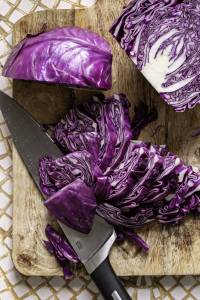
One of the best things about cabbage is how long it lasts. A whole head, kept in the crisper drawer of your fridge, can hold up for two or three weeks without much trouble. You don’t need anything fancy. Just wrap it loosely in a plastic bag or a produce bag so it doesn’t dry out, and keep it away from fruit like apples, which give off gas that can make it spoil faster.
Once you cut into it, things move a little quicker. Wrap the cut half tightly in plastic wrap or store it in a sealed container, and try to use it within a week. The outer leaves might look a little rough or dried out after some time in storage. That’s normal. Just peel those off and the inside will still be good.
If you know you’re not going to get through a whole head before it turns, cabbage also freezes well once it’s blanched, and it’s a great candidate for fermenting into your own sauerkraut if you’re the kind of person who likes a kitchen project.
What to Actually Do With It
Cabbage is one of those vegetables that people either overlook or default to the same one dish every time. It deserves more range than that.
For an easy weeknight side, try shredding green cabbage thin and sautéing it in a hot pan with a little butter or oil until it softens and starts to brown at the edges. Add a splash of apple cider vinegar and a pinch of caraway seeds if you have them, and you’ve got something that tastes like it belongs next to a roast chicken or a pork chop, in about ten minutes.
 Red cabbage is fantastic raw. Shred it thin, toss it with lime juice, a little salt, and some chopped cilantro, and you’ve got a slaw that’s bright and crunchy enough to pile on tacos or serve next to grilled fish. It also holds its color and crunch better than lettuce in a sandwich, so if you’ve ever had a sandwich go soggy by lunchtime, swapping in shredded red cabbage can solve that problem.
If you want something heartier, cabbage does beautifully in soup. Cut it into rough chunks and simmer it with potatoes, carrots, and whatever sausage or beans you have on hand. It softens without falling apart completely, and it soaks up whatever broth you’re cooking it in. This is the kind of dish that tastes better the second day, after it’s had time to sit.
And if you’ve never tried braising a whole wedge of cabbage, it’s worth doing once. Cut a head into thick wedges, sear them in a hot pan until they get some color, then add broth and let them cook low and slow until they’re tender all the way through. It turns a humble vegetable into something that looks like it came from a restaurant kitchen.
Why Cabbage Loves It Here
Cabbage is one of those crops that actually seems to like our weather. It’s a cool season vegetable, which means it doesn’t want blazing heat. It wants mild days, cool nights, and a little fog rolling through now and then. That’s basically a description of the Southern Oregon and Northern California coast most of the year.
That’s part of why cabbage does so well on farms around here. It can handle a wide temperature range, it doesn’t mind our damp springs and falls, and it’s not fussy about soil the way some crops are. Farmers can plant it in succession, meaning new rows go in every few weeks, so there’s a steady supply instead of one big harvest that comes and goes. It also holds in the field longer than a lot of vegetables without losing quality, which gives farmers some flexibility if the weather doesn’t cooperate on schedule.
 None of that sounds thrilling on paper, but it matters. It’s the reason cabbage shows up reliably in our area almost year round, even when flashier crops have their short window and disappear.
Buying it locally means it’s not traveling far to get to your kitchen. A lot of cabbage sold in grocery stores has been trucked in from hundreds or even thousands of miles away, sitting in cold storage for weeks before it ever reaches a shelf. The cabbage in your OtterBee’s order was in a field near here not long ago, grown by a farmer who lives in this region and depends on folks like you choosing to buy local.
That’s really what it comes down to. Every head of cabbage you order is a small vote for keeping farmland active around here, keeping local farmers in business, and keeping food dollars circulating close to home instead of shipping them off somewhere else. It’s not a glamorous vegetable, but the choice to buy it local is a meaningful one.
Anna Nelson is a writer and editor based in Smith River, CA. She writes about local food and seasonal shifts and is a proud OtterBee’s shopper and contributing author to the OtterBee’s Market blog.