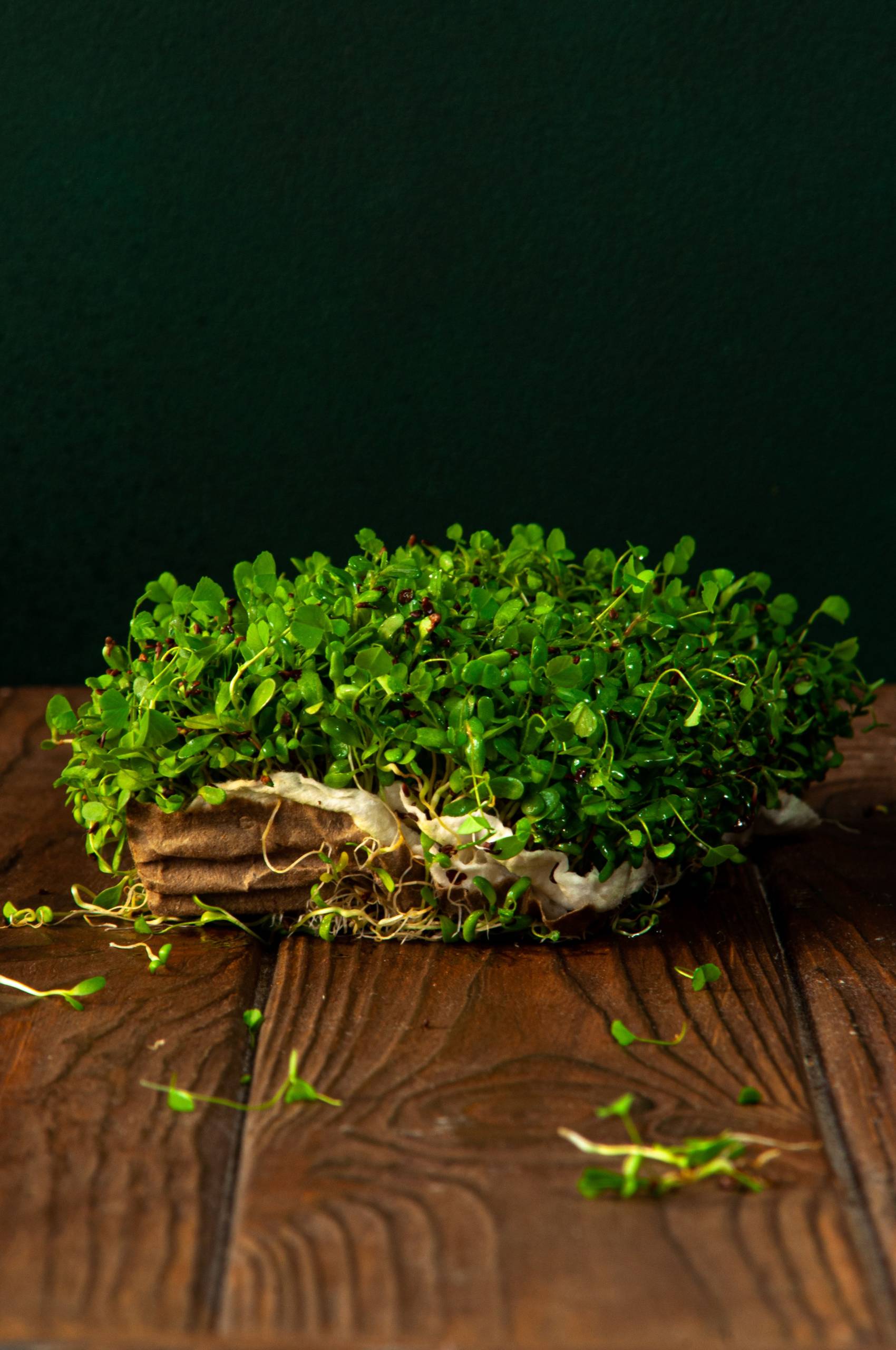
by Anna Nelson – You’ve probably seen microgreens around, at the grocery store, on our website, in health food articles. But what are they, really? Microgreens are tiny, edible baby plants—cut just after the cotyledon (seed) leaves and often the first set of true leaves appear. They span a range of veggies and herbs: think radish, arugula, broccoli, basil, cilantro, sunflower shoots, and more.
You might wonder how they’re different from sprouts or baby greens. Sprouts are grown in water and eaten whole—root, seed, and all—while microgreens are grown in soil or similar media and harvested above the root line, capturing the flavor and texture of mature veggies. Baby greens, on the other hand, are just more developed and fibrous. Microgreens are this sweet in-between: small, tender, and nutrient-packed.
Originating in California in the 1980s as culinary garnishes, they’ve since blossomed into household and local-farm staples. They’re typically harvested 7–21 days after planting, depending on the variety. Their appeal is obvious, they’re flavorful, visually attractive, and easy to grow at home or enjoy from our local farms.
Why They’re Good for You
Calling microgreens “nutrient-dense” isn’t marketing fluff, it’s backed by research. They can contain 4 to 40 times higher nutrient concentrations than their full-grown counterparts .
Key findings:
- Vitamins and antioxidants: Many microgreens have elevated levels of vitamin C, E, K, beta‑carotene, and other carotenoids.
- Functional phytochemicals: Compounds like polyphenols and glucosinolates (especially in brassicas) may help reduce inflammation, oxidative stress, and even combat certain cancers.
- Anti-inflammatory and cardio support: Animal studies feeding red cabbage microgreens showed reductions in LDL (“bad”) cholesterol and triglycerides, with less liver inflammation.
- High bioavailability: For some varieties—like red radish microgreens—the body absorbs nutrients even better than from their mature counterparts.
Microgreens are ideal for people aiming for nutrition with minimal cooking, a small scoop delivers a punch of vitamins, minerals, and antioxidants without needing a lot of space or prep. If you care about nutrient density, local foods, and seasonality, these little greens are a smart addition.
That said, they don’t replace full meals or high-fiber veggies, and hygiene matters, you’ll want well-washed, cleanly handled greens to avoid potential contamination.
Where We Get Ours: Valley Flora Farm
Every week when they are in season, OtterBee’s customers can order microgreens from Valley Flora Farm, a small, family-run organic operation in Langlois. They grow everything using organic practices, then wash, dry, and package the greens right on-site. That means they arrive in your fridge ready to eat, no rinsing or trimming required, and best used within a week for peak freshness.
Our current favorite? The Micro Radish Mix: spicy, crisp, juicy, and zesty. It adds a noticeable peppery kick and texture, almost like gourmet wasabi or horseradish in tender shoots, without overpowering other flavors.
Why local matters:
- Speed: Greens go from field to fridge in just days.
- Flavor: Little turnaround, more vibrant taste.
- Environmental sense: Low miles, less packaging, visible supply chain.
- Community: Supporting a small farm fits right in with our sustainability and local-economy values.
How to Use Microgreens: Everyday Meal Upgrades
Microgreens are easy to incorporate, but if you’ve only seen them as restaurant garnishes, it helps to get creative. Here’s a batch of ideas—from casual every day to subtly elegant.
a) Eggs & Breakfast
- Top scrambled eggs, omelets, or frittatas for freshness and color.
- Fold into avocado toast with lemon zest and chili flakes.
- Layer in breakfast burritos or croissants for crunch.
- Stir into smoothie bowls or yogurt parfaits for texture and nutrients.
b) Salads, Bowls & Sides
- Mix into leafy salads or use alone as a light base.
- Add to grain bowls (quinoa, farro, rice, rice-n-beans).
- Stir into cold pasta or noodle salads.
- Serve as a vibrant side salad: e.g., asparagus or beet salad topped with microgreens.
c) Sandwiches, Wraps & Tacos
- Skip lettuce—stuff radish, arugula, or mustard micros into sandwiches.
- Layer in burritos, veggie wraps, pita pockets.
- Garnish tacos or quesadillas after cooking. Reddit cooks say:
“Use them by the small handful on any kind of sandwich or burger… you sneak half a serving of greens.”
d) Soups, Stir-Fries & Hot Dishes
- Drop into broth-based soups (ramen, miso) just before serving.
- Garnish stir-fry dishes post-cook—preserves texture.
- Top pasta dishes (e.g., lemon‑parmesan pasta with pea shoots) .
e) Snacks & Appetizers
- Sprinkle on crostini or cheese toasts.
- Add to deviled eggs, charcuterie boards, or crackers.
- Include with dips: hummus, yogurt spreads, or guacamole.
f) Smoothies & Drinks
- My personal favorite: add kale, pea, broccoli microgreens to green smoothies.
g) Functional Mixes
- Make a simple pesto by blending arugula or basil microgreens with garlic, nuts, olive oil.
- Use as garnish for baked goods like mini salads on top of quiches or frittatas – toss them cold on after baking.
Two Custom Recipe Ideas
1. Zesty Micro Radish Breakfast Toast
- ½ avocado, mashed with lime juice, salt, pepper
- Spread on toast
- Top generously with Micro Radish Mix
- Sprinkle feta, chili flakes, or hemp seeds
2. Warm Grain Bowl with Microgreens
- Cook quinoa or brown rice
- Add roasted sweet potato cubes, black beans, corn
- Drizzle BBQ or lemon-tahini dressing
- Add a handful of microgreens (pea or radish) just before serving
These boost meals with vitamin, flavor, texture—without hassle.
Microgreens & the Bigger Picture
Microgreens aren’t just tasty, they align with lifestyle priorities around nutrition, sustainability, local agriculture, and climate-friendly food systems. They require minimal water, land, and grow quickly with few inputs. NASA and ESA have even explored them for space missions .
Plus, they let folks in rural or food-desert areas grow fresh greens in a window—even a kitchen shelf.
In Closing
Microgreens are small but mighty. They bring nutrient density, flavor, texture, and beauty to your plate, plus they support local farms like Valley Flora in a sustainable way. They’re easy to use in everyday cooking, just toss them on eggs, wraps, soups, toasts, or even blend into smoothies. Add a bag of microgreens to your next OtterBee’s delivery and try these ideas.