
 by Anna Nelson – If you’ve browsed OtterBee’s website lately, chances are you’ve spotted a bundle of chard glowing like a bouquet—stems in pink, orange, yellow, and red, with crinkled green leaves spilling out like they mean business. Even the green-stemmed varieties bring a bold, sturdy drama to the veggie drawer. But chard isn’t just a pretty face. This leafy green is one of the most underrated, nutrient-dense, and downright versatile vegetables you can put on your plate.
So if you’ve been tempted to add it to your order—or already have—here’s why it deserves a regular spot in your cart. Let’s give this colorful powerhouse the spotlight it deserves.
What Even Is Chard?
Chard is a member of the beet family—yes, that beet—but unlike its root-heavy cousin, chard was bred for its leaves and stems, not its bulb. Also known as Swiss chard, this plant has been cultivated for centuries in Mediterranean kitchens. It’s still a staple in Italian, Greek, and Turkish cooking, though its roots go back even further. Despite the “Swiss” name, it’s not Swiss at all—just a quirk of old seed catalogs.
There are a few varieties you’ll see in local markets:
- Rainbow chard: A mix of red, yellow, pink, and white-stemmed varieties, often bundled together for maximum visual flair.
- Red chard (or rhubarb chard): Deep green leaves with rich red veins and stalks.
- Green or white chard: Milder in color but just as nutritious.
Why Chard Is a Nutritional Powerhouse
 Chard hits that sweet spot of being both hearty and loaded with nutrients. One cooked cup gives you:
- 3.7 grams of fiber
- Over 300% of your daily vitamin K
- Nearly half your vitamin A
- A solid dose of vitamin C, magnesium, potassium, and iron
And it does all this for just 35 calories.
It’s especially rich in antioxidants, including flavonoids like kaempferol (which may support heart health) and betalains (more on those in a minute). Chard’s deep pigments are part of what make it unique nutritionally—and they’re also what make it so beautiful.
But What Does It Taste Like?
Good question. Chard has a flavor that walks a line between spinach and beet greens. The leaves are tender but sturdy, with a slightly earthy, mineral quality. When raw, they can have a bit of bitterness (like dandelion or mustard greens), but cooking mellows that out into something smooth and savory.
The stems are a different experience altogether—more like a cross between celery and asparagus. They soften when cooked and soak up sauces and seasoning like champs.
Don’t toss them!
If you’re sensitive to bitter greens or want a gentler flavor, try green-stemmed chard. If you love a bold, earthy bite, go for the red.
Why Is It So Colorful?
Chard owes its dramatic hues to a mix of plant pigments:
- Betalains: These are the same compounds that give beets their deep red and golden tones. They’re also antioxidants with anti-inflammatory properties.
- Carotenoids: Responsible for yellow and orange tones, these include lutein and zeaxanthin, which are great for eye health.
- Anthocyanins: Found in red and purple varieties, these are linked to reduced risk of chronic disease.
These pigments aren’t just pretty—they’re part of what makes chard a solid choice for anyone eating with their health in mind.
How to Use Chard (Without Overthinking It)
One of the best things about chard is how flexible it is. You can sauté it, bake it, steam it, stir it into soup, blend it into smoothies, or tuck it into an omelet. Here’s how to make it work in your kitchen:
- Quick Sauté (Classic Move)
Slice the stems thin and start them in olive oil with garlic, onion, or shallot. Once softened (about 3–5 minutes), add the chopped leaves and cook until just wilted. Finish with lemon juice, a dash of vinegar, or a sprinkle of crushed red pepper.
- Add to Eggs
Toss a handful into scrambled eggs or use it as a base for quiche. It pairs especially well with goat cheese, feta, or sharp cheddar.
- Use in Soups and Stews
Chard holds up well to long cooking times. Add it to bean soups, lentil stews, or anything tomato-based. Chop the stems and leaves separately and add the stems earlier so they get tender.
- As a Wrap
The large leaves can stand in for tortillas or rice paper. Steam briefly to soften, then stuff with rice, seasoned meat or tofu, and chopped veggies. Roll and serve with dipping sauce.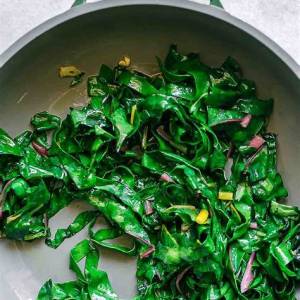
- Toss Into Pasta or Grains
Cook chard with your noodles or grains (like farro, barley, or rice), then dress with olive oil, lemon zest, and parmesan. Instant side dish—or dinner.
- Try it Raw
Chard isn’t just for cooking. Young leaves or thinly sliced older ones can be tossed into salads, especially when paired with a bold dressing like balsamic vinaigrette or tahini-lemon.
- Blend It Into a Smoothie
Chard might not be the first green you reach for when blending, but it works surprisingly well—especially the milder green-stemmed kind. Strip the leaves from the stems and toss them into your favorite fruit smoothie for a boost of fiber, vitamins A and K, and a mild earthy note that’s less intense than kale. It pairs well with banana, pineapple, berries, and citrus.
Tips for Prepping and Storing
- Washing: Chard can hold onto grit, so rinse thoroughly. Dunk in a big bowl of water and swish around before draining.
- Separating: For most recipes, cut the stems from the leaves and cook them separately—unless you’re going for a longer braise.
- Storing: Keep it unwashed in the fridge in a produce bag or wrapped in a damp towel. It’ll last 3–5 days, though fresher is always better.
Why Local Chard Is Better
Like most leafy greens, chard loses flavor and nutrients the longer it sits in storage or travels across the country. Local chard—like the bunches we get from Valley Flora Farm in Langlois or Ocean Air Farm in Ft. Dick—is picked fresh, delivered quickly, and still full of that farm-field vitality.
Buying local also means fewer food miles and a smaller carbon footprint. Chard is a cool-weather crop that thrives on our coastal farms, so when it’s in season, it doesn’t need to be shipped in from hundreds (or thousands) of miles away.
A Few Final Notes
If chard isn’t yet in your regular rotation, this is your sign to give it a shot. It’s one of those vegetables that quietly pulls more than its weight in flavor, nutrition, and beauty. It plays well with everything from eggs and grains to beans and meat. And it brings serious visual joy to your cutting board.
Whether you’re a seasoned veggie-lover or still figuring out what to do with that colorful bunch, chard is worth getting to know. Add it to your meals this week and see what happens—you might just find yourself looking forward to ordering it regularly.