
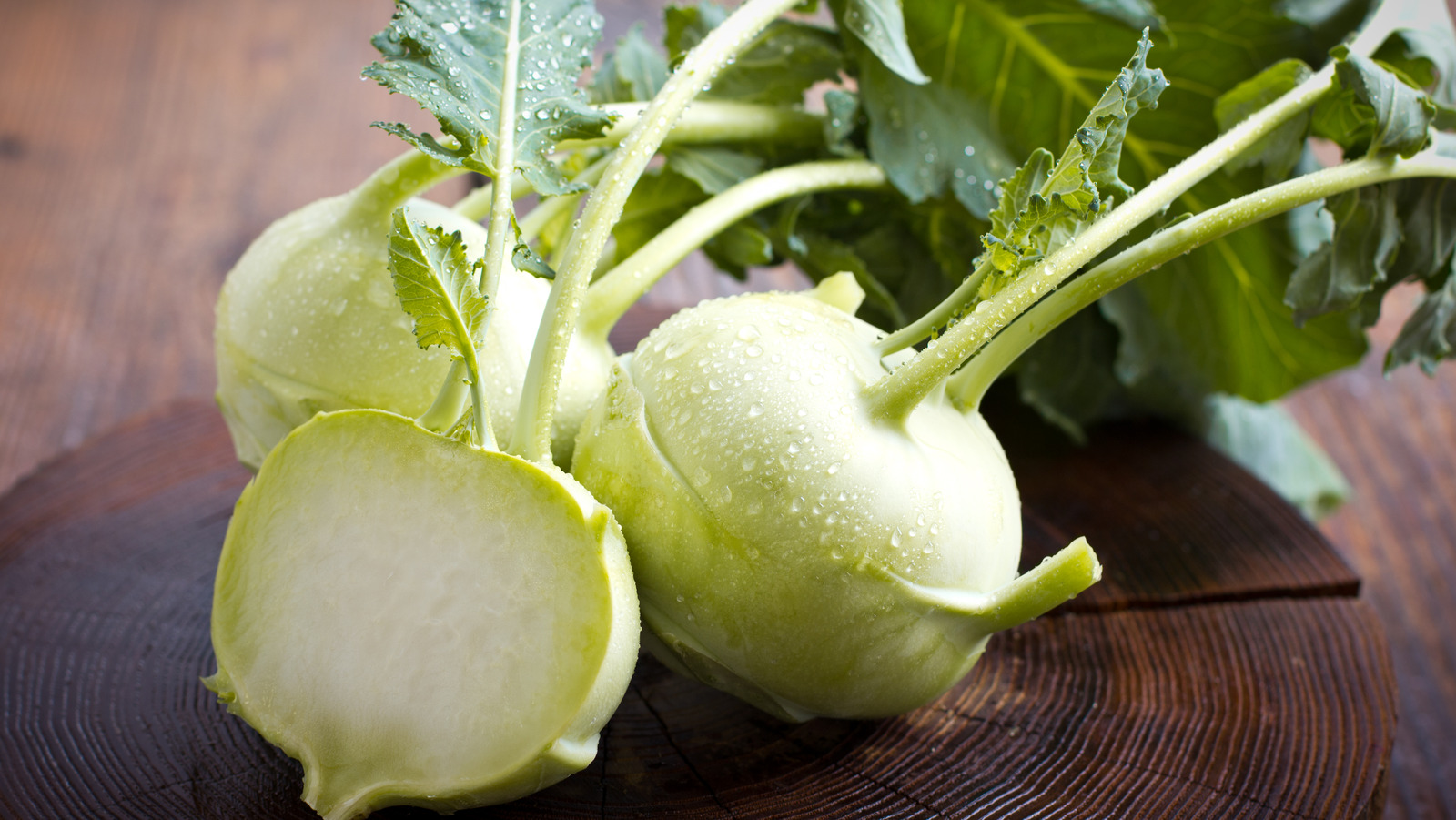
by Anna Nelson – You’ve probably seen kohlrabi pop up on the OtterBee’s Market site now and then, maybe you’ve even added one to your order out of curiosity, then stared at it wondering what on earth to do with it. I get it. Kohlrabi is strange-looking. It’s got a UFO shape, a leafy top, and a name that sounds more like a jazz musician than a vegetable. But once you get to know it, it’s kind of a gem.
I’ll admit, I didn’t always think so. I used to dread seeing kohlrabi in my old CSA basket (not from OtterBee’s, for the record). Every time I sliced into one, it was fibrous and woody, like trying to chew through a chunk of raw broccoli stem that had seen better days. Turns out, that wasn’t kohlrabi’s fault. It was just overgrown and picked too late, something that can happen with any farm when harvesting gets behind. When you get a good one, harvested young and tender, it’s a totally different story.
So let’s dig in: what is kohlrabi, what does it taste like, and how do you actually use it?
What Is Kohlrabi?
Kohlrabi is part of the brassica family, which means it’s related to cabbage, broccoli, cauliflower, and kale. But unlike those, it grows as a swollen bulb above ground, kind of like a turnip from outer space. The name comes from the German words for cabbage (kohl) and turnip (rübe), though technically, kohlrabi isn’t a root vegetable. It’s a swollen stem.
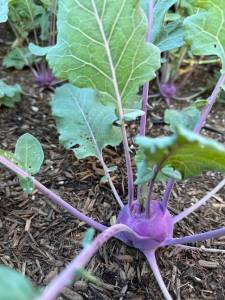
There are green and purple varieties, and both taste the same. The greens that grow on top are edible too, similar to collard greens or kale, and can be sautéed, thrown into soups, or added to a veggie stir fry.
What Does It Taste Like?
 The taste is subtle, a little sweet, and a little peppery. Imagine a cross between a mild radish and the tender core of a broccoli stem, with a hint of cabbage flavor. The texture, when it’s fresh and not overgrown, is crisp and juicy—almost like a firm apple or jicama. It’s great raw, especially sliced thin in salads or cut into matchsticks for dipping.
When cooked, it mellows out. Roasting brings out its sweetness. It can hold its shape well in soups or stews. And if you’re someone who likes creamy gratins or stir-fried vegetables, kohlrabi fits right in.
How to Use It
Here are a few easy ways to try kohlrabi at home:
Raw:
- Peel it first—under the outer skin there’s often a second, fibrous layer you’ll want to trim away.
- Slice into thin rounds and layer it in sandwiches or wraps.
- Shred or julienne for slaws with lemon juice and olive oil.

- Cut into sticks and serve with hummus or ranch.
Cooked:
- Toss with olive oil and roast at 400°F for 25–30 minutes, like you would with potatoes.
- Add to soups or stews—it holds up well and doesn’t get mushy.
- Steam it and mash with butter, salt, and garlic like you would potatoes.
- Try it in a stir-fry with soy sauce and ginger.
Bonus tip: If you get one with leaves still attached, treat them like any other dark leafy green. They’re great sautéed with garlic or added to soups.
A Word About Texture
Let’s talk about the texture thing. Because this is where folks either fall in love with kohlrabi, or write it off forever.
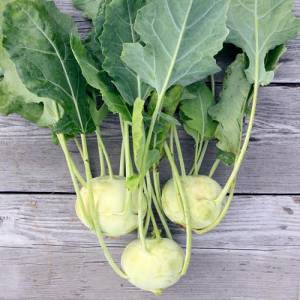 If you’ve tried kohlrabi in the past and thought, meh, this is tough and stringy, chances are it was overgrown. Once they get too big, the interior gets woody, especially near the center. It’s not dangerous or spoiled, it just makes for a more unpleasant eating experience, especially raw. That’s why sizing and harvest timing really matter.
The ones we stock at OtterBee’s come from trusted local farms that pick early, while the bulbs are still tender. You should be able to slice through them with a knife easily, and they shouldn’t feel dry or hollow in the middle.
If you’re not sure how to tell a good one from an old one, look for:
- Smooth skin (wrinkled means it’s been sitting too long)
- Firmness (shouldn’t give when you press)
- No large cracks or brown spots
- Small-to-medium size (tennis ball to baseball-sized is ideal) – UNLESS, that is, you’re getting the Giant Kossack kohlrabi that Valley Flora grows in the winter…those can be 2-3 pounds, but are as tender as the smaller version!
Where It Comes From
Kohlrabi is grown all over the world, especially in cooler climates. It’s popular in India, Germany, Vietnam, and parts of Eastern Europe, where it’s often cooked down in curries or stews.
Around here, it thrives in early spring and late fall, especially in coastal climates like ours. Ocean Air Farm and Valley Flora Farm, along with other OtterBee’s partner farms, grow it when the weather’s cool enough to keep it sweet and mild.
 Final Thoughts
If you’ve been burned by bad kohlrabi before—like I was—don’t give up on it. Fresh, local kohlrabi is a whole different vegetable than the giant, woody ones you might’ve gotten in a less-than-stellar CSA box. Try it raw, try it roasted, or just toss a few sticks into your next veggie dip plate and see what you think.
It’s one of those sleeper hits of the seasonal veggie world: humble, odd-looking, and surprisingly versatile. And like most things at OtterBee’s, it shines brightest when it comes straight from a local farm, fresh and full of flavor.

