by Anna Nelson – I want to talk about something a little different today. Not a new farm, not a new vegetable, but a question that’s been on my mind this summer. Why does it matter where your lettuce comes from?
If you’ve turned on the news lately, you probably already know the answer is more urgent than it sounds. There’s a big outbreak going around right now tied to bagged iceberg lettuce. Cyclospora, a nasty little parasite, has made thousands of people sick across the country. The lettuce got traced back to a grower in central Mexico, sold under names like Taylor Farms and Marketside, and shipped out to grocery stores and fast food chains in dozens of states. Some people ended up hospitalized. A couple of people died. It’s the kind of story that makes you want to look twice at the produce bin.
I’m not writing this to scare anyone. I’m writing it because it’s a good moment to talk honestly about how our food system works, and why buying from people you can actually name matters more than it used to.
A lettuce supply chain a thousand miles long
Here’s the thing about that bagged lettuce sitting in a big grocery store. It probably traveled a long way to get there. Grown in fields in central Mexico, packed and processed at a facility, shipped by truck across the border, distributed to a regional warehouse, then trucked again to your local store. That’s a lot of hands, a lot of miles, and a lot of chances for something to go wrong.
 When contamination happens somewhere in that chain, it’s really hard to catch early. By the time health officials figure out where the problem started, the lettuce has already gone out the door in a hundred different directions. It’s in salad kits. It’s on fast food sandwiches. It’s already been eaten by thousands of people before anyone even knows there’s a problem. That’s just how it goes when your food travels far and gets mixed together on a massive scale.
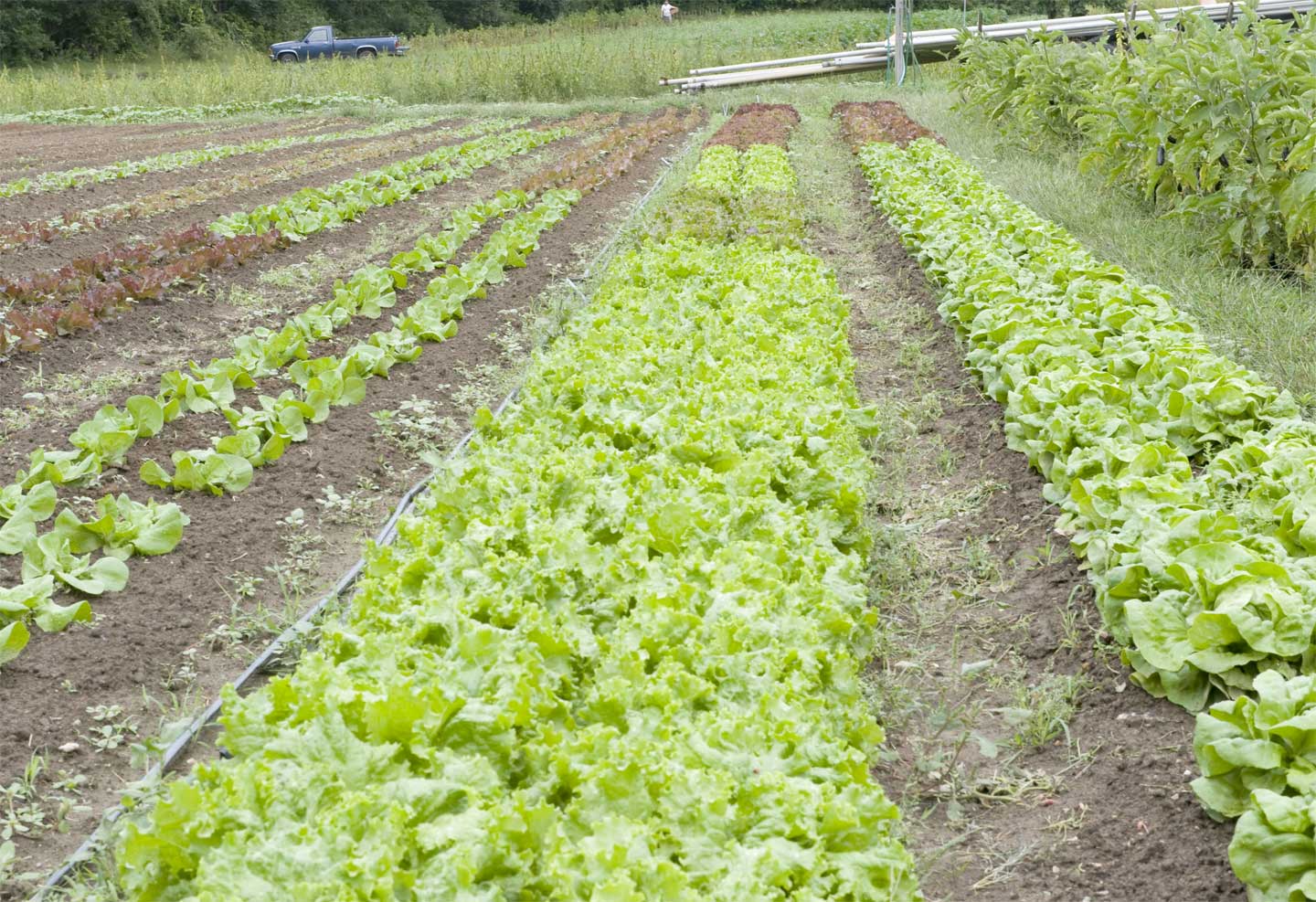
Compare that to a head of lettuce from Valley Flora Farm, Ocean Air Farm, or Lehne Farms. It came out of the ground close by. It went straight from the field to our pack-out room to your door, usually within a day or two. There’s no long chain of handoffs where things get mixed together from dozens of different farms. If something ever did go wrong, we’d know exactly which field it came from and could pull it fast. That’s not marketing talk. That’s just what a short supply chain does. Fewer steps means fewer places for problems to hide.
What this looks like on your plate
Our lettuce comes from Valley Flora up in Langlois (in the summer), and Ocean Air Farm down in Ft. Dick (in the winter). Different farms, different soil, but the same idea. Small crews, hand harvested, in your kitchen within days of being cut.
You can taste it too. Local lettuce doesn’t have that slightly bitter, tired flavor that bagged lettuce gets after sitting in a truck and a warehouse for a week. It’s crisp. It snaps when you fold it. The leaves hold their shape in a salad instead of going limp by dinner. A simple bowl of Little Gem lettuce with a squeeze of lemon, some olive oil, and flaky salt tastes like something worth eating on its own, not just a vehicle for dressing.
 If you want to put it to real use these next few weeks, try a wedge of romaine with a spoonful of ranch and some crumbled bacon, or shred a head of green leaf lettuce for fish tacos with Fishermen’s Direct rockfish. Little Gem halves hold up great on the grill too, just a quick char and a drizzle of good olive oil. Nothing fancy. Just good lettuce treated simply.
The tricky part nobody talks about
I do want to be honest about something, because it’s easy to make this sound like a simple win for local farms. It’s not quite that simple.
When a national outbreak hits, demand for local lettuce spikes fast. People get nervous about the grocery store stuff and want to buy local instead, which makes sense. But our growers can’t just flip a switch and grow more lettuce overnight. Our farmers planted their lettuce crops months ago based on what they expected to sell. Lettuce takes real time to grow. You can’t rush it along just because the news cycle changed.
So during a moment like this, you might actually see less lettuce available from us, not more. That’s not because local farms aren’t trying. It’s because they were never set up to be the backup plan for a national grocery chain’s supply problems. They planned for their regular customers, not for a sudden rush. (That’s partly why, for instance, Ocean Air Farm hasn’t been able to supply OtterBee’s with their produce this summer; it’s all they can do to keep up with their RETAIL operation, much less supply businesses like us!)
Here’s the part I think matters most, though. The more we all buy local, all the time, not just during a scary news week, the more our farmers can plan around real, steady demand. If Valley Flora, Ocean Air and Lehne’s know a certain number of families are ordering their greens every single week, they can plant more next season with confidence. They’re not guessing anymore. They’re building around a community that shows up consistently. That’s how a local food system gets stronger and more resilient over time, not by everyone panic buying for two weeks in August and then going back to the usual grocery store rotation.
Building a habit, not just a moment
I think that’s really the heart of it. Buying local isn’t just about dodging one bad headline. It’s about building a kitchen and a community that doesn’t have to rely so heavily on a food system where one contaminated field in another country can sicken thousands of people before anyone even notices.
It’s slower. It’s smaller. Some weeks the lettuce selection might be lighter than what you’d find at a big chain store. But you know where it came from. You know the people who grew it. And when something does go wrong somewhere else in the world, you can feel a little more steady, because your dinner didn’t have to travel a thousand miles to reach you.
So next time you’re building your order, grab a head of lettuce. Not because it’s trendy, but because it’s one small, steady choice that adds up to something bigger for all of us here on the coast.
Anna Nelson is a writer and editor based in Smith River, CA. She writes about local food and seasonal shifts and is a proud OtterBee’s shopper and contributing author to the OtterBee’s Market blog.