
by Anna Nelson – I have it on good authority that peach season is just around the corner, and I can’t wait. Not just because I love peaches, but because peaches have been part of my life for as long as I can remember. Here’s something most people don’t know about me: as a baby, my nickname was “Peaches.” My family gave it to me because peaches were, quite literally, my favorite food. Forget mashed carrots or cereal—give baby me a bowl of mashed peaches, and I was happy. Apparently, I’d smear them everywhere, gumming each spoonful with total focus, peachy sweetness all over my face. Some kids had teddy bears; I had peaches.
So yes, I get especially excited when peach season rolls around here in the far corner of the Pacific Northwest. Every year, it feels like a little celebration.
Peaches in the Pacific Northwest
We don’t always think of the Pacific Northwest as “peach country,” but peaches have a long and surprising history in this region. While the big-name peach states are Georgia, South Carolina, and California, Oregon and Washington quietly hold their own. The Willamette Valley in Oregon and the Yakima Valley in Washington have been producing peaches for over a century, thanks to their warm summers and fertile soils.
Peaches first arrived in the Pacific Northwest in the 1800s, brought by settlers traveling along the Oregon Trail. Early orchards were planted in sheltered valleys where the trees could survive colder winters. Unlike apples or pears, which thrived almost anywhere, peaches were picky about where they’d grow. Farmers learned to plant them in the warmer microclimates along river valleys and hillsides where frost wouldn’t damage the delicate blossoms.
In Oregon, peaches became a small but beloved crop, especially in places like Medford and the Hood River Valley. A century ago, Medford was so famous for its peaches that local papers bragged about their “superior flavor and size” compared to California fruit. Those orchards eventually gave way to pear production (which proved easier to store and ship), but a few peach orchards have stuck around.
 Today, most of the peaches you’ll see at our local markets are coming over from southern Oregon or up from northern California, sometimes from small farms that only sell locally. Those farmers are growing varieties chosen for taste, not long-distance shipping. Which is why, if you’ve ever bitten into a ripe, just-picked peach from a local farm stand, you know—this isn’t the same as a grocery store peach trucked in from far away.
Peaches in Del Norte and Curry County
Here in Del Norte County and across the border in Curry County, peaches are a treat because they’re not as common as other fruits. Our coastal climate is tricky—cool ocean breezes and fog make it hard to grow peaches commercially. Still, a few dedicated backyard growers and small farms manage to coax them from the earth, often choosing varieties that can handle a little chill.
One fun fact: Peaches grown in slightly cooler climates, like ours, can actually be more flavorful. The slower ripening process allows sugars to develop more fully, giving you that perfect balance of sweetness and acidity.
Chetco and Pistol River residents often share stories of backyard peaches that taste better than anything you’ll find in stores. In Smith River, where I live, I’ve seen neighbors trade jars of homemade peach jam made from trees that are more than 30 years old, planted back when people thought, “Why not see if peaches will grow here?” Some years they do beautifully; other years the fog wins. But when we get a good peach year, it feels like a minor miracle.
Even if you’re not lucky enough to have a peach tree in your yard, local delivery options (like ours at OtterBee’s Market) bring in peaches from just inland. Those orchards are close enough that the fruit can be picked at peak ripeness—sometimes still warm from the sun when they’re loaded into the truck. That’s a huge difference from supermarket peaches, which are often picked hard and green so they’ll survive shipping.
Fun Peach Facts for Our Corner of the Coast
 A few peach tidbits you can pull out next time you’re chatting with a neighbor over coffee:
- Peaches are actually part of the rose family, along with almonds, plums, and cherries. That’s why peach blossoms smell so floral in spring.
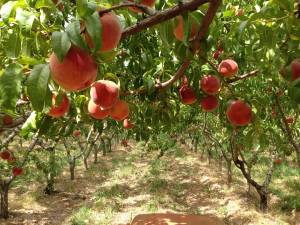
- A single peach tree can produce up to 150 pounds of fruit in a good year, which is why some backyard growers have extra to share.
- Peaches aren’t just for sweets—many local chefs sneak them into savory dishes, like grilled peach and goat cheese salads or peach salsa for grilled fish.
- Freestone vs. clingstone: Most of the peaches we get locally are “freestone,” meaning the pit pops right out. Perfect for cobblers and fresh eating.
- If you’ve ever had a peach that tasted almost like honey, you might have eaten an “Elberta” or “Red Haven.” Those varieties do especially well in southern Oregon.
How to Choose the Best Peaches
If you’re ordering through OtterBee’s, you’re already getting top-quality fruit, but if you’re picking your own from a farm stand, here’s what to look for:
- Smell first: A ripe peach smells sweet and peachy, even before you bite in. No smell? Probably not ripe yet.
- Check the color: A deep golden-yellow background color (under the red blush) usually means it’s ready. Green means it’s still underripe.
- Gentle squeeze: It should give slightly under your fingers, but not feel mushy.
- Skip perfection: A little surface bruise or scar doesn’t hurt—often those are the sweetest.
And don’t be afraid to buy a few slightly firmer peaches. Leave them on the counter for a couple of days, and they’ll soften up beautifully.
A Healthier Peach Cobbler
When it comes to peaches, I’m a purist most of the time. Slice them up, maybe drizzle a little honey, and I’m happy. But I also love a good cobbler.
The problem is that most peach cobbler recipes are loaded with sugar and butter. Delicious, yes, but not something I want to eat every day. So here’s my favorite slightly healthier version. It’s still cozy and comforting, but it uses less sugar, swaps some of the butter for yogurt, and adds whole-grain flour for a little extra fiber.
Ingredients
For the peach filling:
- 6–7 fresh peaches (about 6 cups, peeled and sliced)
- 2 tablespoons honey or maple syrup
- 1 tablespoon cornstarch (or arrowroot powder)
- 1 teaspoon cinnamon
- 1 teaspoon vanilla extract
- Pinch of salt
For the topping:
- 1 cup whole-wheat pastry flour (or half whole-wheat, half all-purpose)
- 1 teaspoon baking powder
- 1 teaspoon cinnamon
- ¼ teaspoon salt
- 2 tablespoons butter (cold, cut into small cubes)
- 3 tablespoons plain Greek yogurt
- 2 tablespoons honey or maple syrup
- ¼ cup milk (dairy or non-dairy)
Instructions
- Preheat your oven to 375°F. Lightly grease an 8×8 baking dish.
- In a bowl, toss the peach slices with honey, cornstarch, cinnamon, vanilla, and a pinch of salt. Spread them in the baking dish.
- In another bowl, mix the flour, baking powder, cinnamon, and salt. Cut in the butter with a fork until it looks crumbly.
- Stir in the yogurt, honey, and milk until just combined. The dough will be thick and sticky.
- Drop spoonfuls of the topping over the peaches. Don’t worry about covering everything—cobblers are meant to be rustic.
- Bake for 30–35 minutes, until the topping is golden and the peaches are bubbling.
- Let it cool slightly before serving. It’s amazing on its own, but a scoop of vanilla yogurt or coconut milk ice cream doesn’t hurt.
Why Local Peaches Matter
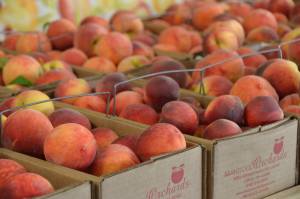 One last thought: buying local peaches does more than just give you better flavor. It keeps small farms in business, reduces food miles, and helps preserve heirloom varieties that aren’t grown commercially anymore. The money you spend stays closer to home, supporting the local economy rather than a giant shipping operation.
Plus, there’s something about eating a peach that was picked just a day or two ago, ripened by the same sun you feel when you’re outside. It’s a reminder that our coastal communities—fog, rain, and all—are still connected to the rhythms of the season.
I’ll be stocking up as soon as the first delivery comes in, and you can bet I’ll be making this cobbler at least once. But mostly, I’ll be eating peaches the way I did when I was a baby: no fuss, no fancy recipe, just me and a perfectly ripe peach.