
by Anna Nelson – If you’re filling your OtterBee’s cart this week and wondering what to cook for dinner, let me make a pitch: add some Oat Hill Organic Beef. It’s more than just another cut of meat. It’s a taste of the Smith River plain, a family story stretching back six generations, and a chance to put dinner on the table knowing it came from just up the road. That’s the kind of purchase that feeds both your family and your community.
We all know beef is beef, right? A burger is a burger, a steak is a steak. But the truth is, where your beef comes from changes everything. It changes how it tastes, how it feels in your body, and how it impacts the landscape. When you take a bite of Oat Hill beef, you’re not just eating protein. You’re eating a story rooted in this very corner of the world, on land where the Smith River winds through wild salmon country and where fog hangs over the fields in the morning. It’s food that belongs here. And that matters.
A Family Ranch on the Smith River Plain
Oat Hill Organic Beef is run by the Palmer Westbrook family, who’ve been stewarding land in Del Norte County for more than 130 years. That’s six generations of hands working the same ground, raising cattle in the same valley, and passing along both knowledge and responsibility. These are families who’ve watched storms roll in off the Pacific, kept cattle through dry summers and wet winters, and stuck around because the land is part of who they are.
Their ranch sits on the Smith River plain, near the upper reach of Tryon Creek. If you’ve ever driven Highway 101 north of Crescent City and glanced around at the broad green pastures, you’ve probably seen their cattle grazing. Ocean air sweeps in and keeps the grass lush. The fog that drifts in from the sea isn’t just picturesque—it’s what allows cattle to graze nearly year-round without irrigation.
This isn’t ranching on an industrial scale. It’s not anonymous feedlots or cattle shipped hundreds of miles. It’s cows born and raised on the same pastures they graze, tended by people who know them. That kind of continuity matters. When a family has been on the same land for more than a century, they don’t treat it like something to use up and move on from. They treat it as a living thing to pass along. That’s part of why Oat Hill chose to go fully organic, certified through CCOF. No hormones, no antibiotics, no shortcuts—just grass, water, time, and care.
The name “Oat Hill” itself reaches back to the ranch’s early days. The story goes that oat hay was one of the first crops grown on the farm, and the name stuck. Now, it’s a reminder that this is a working landscape, one that’s always fed both people and animals.
Beef That’s Better for You, the Animals, and the Land
There’s a lot of chatter out there about grass-fed beef. But when you eat Oat Hill beef, you can actually taste the difference. Their cattle are 100% grass-fed and grass-finished, meaning they’re never switched to grain at the end of their lives. They graze on pasture from start to finish, which makes for leaner meat and a flavor that people often describe as “clean” or “beefy” in a way that grain-finished beef isn’t.
Nutritionally, grass-fed beef often contains higher omega-3 fatty acids, more antioxidants, and a healthier fat profile. It tends to be lower in overall fat, which means it cooks a little differently: burgers sizzle but don’t leave a pool of grease, steaks taste rich without being heavy. For folks who like to know exactly what they’re putting into their bodies, it’s reassuring to know these animals ate only grass and were never given growth hormones or antibiotics.
 For the cattle, life is simpler: they spend their days roaming, grazing, and following natural rhythms instead of standing in feedlots. For the land, keeping cattle on grass pastures means the soil stays covered, which prevents erosion and helps capture carbon. Pastures also act as sponges for rain, filtering water before it returns to the river system.
And then there’s the bigger picture. Oat Hill has worked with the Smith River Alliance and the Del Norte Resource Conservation District on restoration projects along Tryon Creek, which winds through their ranch. This kind of collaboration improves salmon habitat, supports migratory birds, and makes the ranch stronger for the next generation. It’s the very definition of a “working landscape”—land that produces food while also sustaining wild systems.
When you buy Oat Hill beef, you’re not just getting dinner. You’re backing a ranching model where people, animals, and wild ecosystems all benefit.
Why Oat Hill Belongs in Your OtterBee’s Order
So let’s bring this back to the kitchen table. At OtterBee’s, we carry several Oat Hill cuts: ground beef in one-pound packages, handy pre-formed burger patties, and steaks like New York strip and filet mignon. They’re versatile, delicious, and surprisingly easy to cook.
Imagine a Friday night burger night. Instead of grabbing whatever is in the freezer case at the supermarket, you start with Oat Hill patties. You throw them on the grill, toast some local bread for buns, and top them with fresh lettuce from Valley Flora and fresh tomatoes from Lehne Farms. The result is a burger that tastes like home because every piece of it comes from here.
Or maybe you want something a little fancier. A filet mignon from Oat Hill doesn’t need much—just a hot skillet, salt, pepper, and a quick sear on each side. Pair it with roasted “Painted Purple” potatoes (also from OtterBee’s) and sautéed greens, and you’ve got a dinner that would cost three times as much at a restaurant.
Even ground beef shines when it’s this good. A simple chili or spaghetti sauce made with Oat Hill beef has a depth of flavor that comes from grass and time, not additives. One customer told me they’d stopped buying supermarket ground beef altogether after trying Oat Hill because the difference was that noticeable.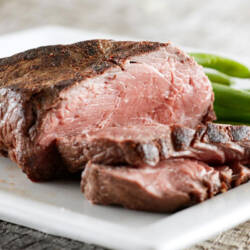
But beyond flavor, there’s the satisfaction of knowing exactly what you’re eating and supporting the people who raised it. Your food dollars aren’t going to a distant feedlot system. They’re staying here in the Wild Rivers Coast region, keeping a sixth-generation ranch alive, and helping maintain salmon streams and wildlife corridors. That’s something no supermarket brand can match.
So here’s my nudge: when you’re placing your OtterBee’s order this week, don’t just scroll past the meat section. Throw in a package of Oat Hill beef. Try it once, and see if you don’t taste the difference.
The Bigger Picture of Eating Local
Sometimes it’s easy to forget how much shipping goes into modern food. Most supermarket beef in our area comes from hundreds or even thousands of miles away. It’s processed in large plants, packed in trucks, and moved across the country. By the time it lands in your cart, it’s traveled a journey longer than some people’s vacations.
Buying Oat Hill beef cuts that journey down to a handful of miles. Less fuel burned, fewer emissions released, and fresher food on your plate. That’s the beauty of local food, it’s not just a buzzword, it’s a real reduction in distance, and it comes with all the side benefits of keeping money in the local economy. Ranchers pay local workers, who buy groceries at local stores, who then support other local businesses. It’s a web and every purchase strengthens it.
There’s also the climate side. Grass pastures like those at Oat Hill pull carbon from the atmosphere and store it in the soil. That doesn’t erase the impact of raising cattle, but it does mean the ranch is part of a healthier cycle. Add in their creek restoration work and organic practices, and you’ve got a model that respects both food and the natural systems around it.
In the end, buying Oat Hill Organic Beef isn’t about guilt or obligation. It’s about joy. The joy of eating food that tastes better. The joy of knowing the story behind your dinner. The joy of walking outside, smelling the ocean air, and realizing the same fog that rolled over your house that morning is feeding the grass that fed the cow that became your steak.
That’s the kind of connection most of us are craving these days. And it’s waiting for you in every bite of Oat Hill beef.

