by Anna Nelson – When you open up your OtterBee’s delivery this time of year and see peppers, tomatoes, cucumbers, or a crisp apple, there’s a good chance it all started in Garden Valley at Lehne Farms. Garden Valley is a small farming community just northwest of Roseburg, in the heart of Oregon’s Umpqua Valley. Lehne Farms has been part of this landscape for generations, and their story is one of steady stewardship, family continuity, and a love of growing good food for their neighbors.
A farm that has grown with the valley
The roots of Lehne Farms stretch back to the late 1930s, when Myron Lehne and Helen Woodruff set out with a dream of farming their own piece of land. They started small, just ten acres in Garden Valley, where they grew walnuts, daffodils, and bare-root nursery stock. Over the years, they added acreage and raised their boys on the farm, teaching them the kind of resourcefulness every farmer needs. If a piece of equipment broke, you fixed it or you figured out a better way to make it work.
By the early 1970s, the next generation had stepped in. Ray took over the nut orchards, focusing on walnuts and hazelnuts, while Norm and his wife Cinda expanded into vegetables and fruit. They opened a U-Pick in 1974, giving neighbors the chance to harvest their own food right from the fields. Over time, they added hazelnut orchards, more fruits, and an ever-growing variety of vegetables. The valley around them was changing, but the farm remained a steady presence, rooted in the land and in their community.
Today, the story continues with Norm and Cinda’s son Glen and his wife Wendy. After twenty years in the Air Force, Glen returned to Garden Valley with a renewed sense of commitment to the family farm. Together with Wendy and their daughters Ashlynn and Kylie, they’ve carried the farm forward into its next chapter.
Grounded in family, grounded in the land
Lehne Farms has never been a massive industrial operation, and that’s the point. Their 70-plus acres are some of the most versatile farmland in Oregon, managed with an attention to detail that comes only from a family who knows every row, every tree, every piece of equipment.
The farm is diversified in the way many older family farms once were: orchards of apples, pears, peaches, and plums; rows of peppers and tomatoes ripening in the sun; hoop houses stretching the growing season for tender crops; fields of carrots, beans, and cucumbers. This diversity is partly practical—it spreads risk and helps balance out the ups and downs of farming—but it also speaks to a deeper philosophy: the land is at its best when it’s supporting many different crops, not just one.
The family’s approach to farming has always leaned on ingenuity and resilience. Over the decades, they’ve repaired, modified, and re-engineered their equipment to fit their exact needs. They’ve adapted to changing markets, growing what local customers most wanted to eat. And they’ve invested in infrastructure like hoop houses to make the most of Oregon’s mild winters. Glen likes to point out that in their part of the state, it’s not so much how warm the winters get, but how “not cold” they are. With the right tools, you can keep fresh food coming all year.
What’s on the table now
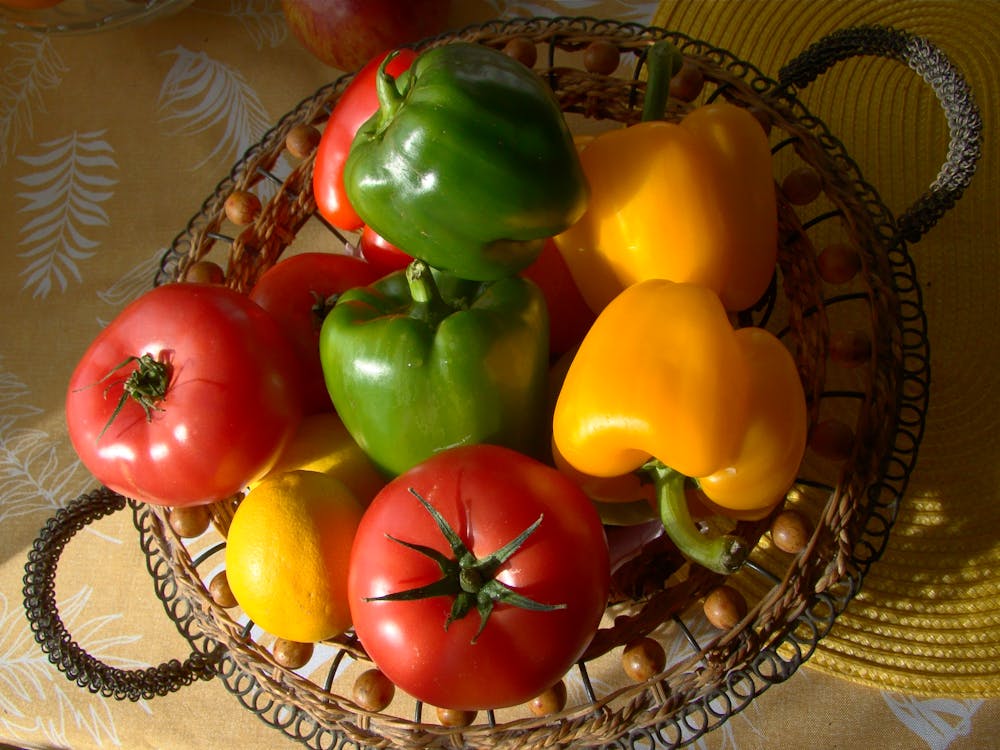
Right now, Lehne Farms is at the peak of abundance. Their peppers come in every shade—from sweet bells to fiery hots—while tomatoes ripen into juicy, full-flavored fruits that taste like summer itself. Cucumbers, eggplant, and corn round out the vegetable harvest. And on the fruit side, it’s a banner season for apples, peaches and pears, the kind of crisp, fragrant fruit that makes you forget grocery store produce even exists.
For OtterBee’s customers, that means you can choose from a real variety of options in your weekly order. Sweet peppers and cherry tomatoes for salads and quick snacking. Heirloom slicers for sandwiches or roasting. Cucumbers that are actually crunchy. Apples that hold their snap in your lunch bag. Peaches that drip down your chin. Pears with that perfect balance of juice and grit. These aren’t commodities ship
ped halfway across the globe. They’re picked at peak ripeness and delivered to us just a short drive from where they were grown.
It’s easy to take variety for granted until you remember that most supermarket produce is built for shelf life and shipping, not flavor. Farms like Lehne’s flip that script: they grow for taste, nutrition, and local freshness first.
Community connections
Over the years, Lehne Farms has become a gathering place as much as a source of food. Their U-Pick fields are still a tradition for many families, who head out each summer and fall to pick apples or peppers straight from the rows. They’ve run CSA harvest boxes and farmstand sales, building a network of eaters who want a direct connection to their food.
For us at OtterBee’s, that same spirit flows into the produce we deliver each week. When we bring you an order filled with Lehne’s vegetables and fruits, you’re tapping into a chain of care and connection: the farmer who planted the seed, the family who tended the rows, the land that nourished the crop, and the local food system that keeps it all circulating close to home.
This matters for more than nostalgia. Local farms anchor food security in a real way. When more of our food comes from close by, we’re less vulnerable to disruptions in far-flung supply chains. We cut down on fuel and transportation costs. We support families who reinvest their earnings right back into the community. And we keep farmland in production, instead of letting it slip into development.
Passing the torch
One of the quiet challenges in farming is succession. The average age of an Oregon farmer is around 60, and many operations don’t make it past a generation or two. Lehne Farms is a hopeful counterpoint to that trend. With Glen and Wendy stepping in, and their daughters already learning the rhythms of farm life, there’s a real possibility of continuity.
Glen has talked about the farm as a kind of factory with many moving parts—places where each family member can find a niche, bring their skills, and build a livelihood. It’s a modern way of thinking about an old-fashioned farm. Rather than one person carrying the entire operation, it’s about building a structure where multiple generations can plug in and keep things thriving.
That mindset is part of what keeps Lehne Farms so resilient. They’ve weathered the shifts of markets, climate, and community needs by diversifying not only what they grow, but also how they operate. From nuts to vegetables to fruit, from U-Pick to CSA to wholesale, they’ve kept many doors open. That adaptability is a lesson in itself: local food systems survive because they bend, adjust, and find new ways to connect.
Why it matters
 At OtterBee’s, we spend a lot of time thinking about the bigger picture of food. Every apple, pepper, or cucumber on our website has a backstory, and when that story is rooted right here in our region, it’s worth celebrating.
Lehne Farms shows what’s possible when a family digs in for the long haul. They’re not chasing the lowest costs or the fastest turnaround. They’re tending soil, trees, and vegetables with a sense of continuity. They’re raising kids who see farming not as a relic but as a living, evolving way of life. And they’re reminding us that food isn’t just something that shows up on a shelf—it’s the product of decades of choices, adaptations, and care.
When you bite into a Lehne Farms peach or toss their peppers into a stir-fry, you’re tasting more than produce. You’re tasting a landscape, a family history, and a commitment to local food that makes our whole community stronger.
Eating local, sustaining local
Food sustainability can sound like a buzzword until you think about it in terms of distance. How far did this pepper travel? How many hands did this tomato pass through before it reached you? In the case of Lehne Farms produce at OtterBee’s, the answers are simple: not far, and not many.
That’s the beauty of being able to source directly from growers in our region. The flavor is better, the nutrient density is higher, and the carbon footprint is dramatically lower. It’s not just good for you—it’s good for the valley, for the coast, and for everyone who depends on these small farms to keep land in food production.
Lehne Farms is one of those steady presences you can count on, season after season. They remind us that farming isn’t just about yields or efficiency; it’s about nourishment, resilience, and connection. And when those peppers, peaches, or apples show up in your OtterBee’s order, you’re part of that story too.